TL;DR
An 11.25x19.25x2 filter only cleans the air that passes through it, so it has to pass the three-seal check: arrow toward the blower, all four edges tight against the slot, and the slot cover closed. Miss one and return air slips around the filter into the blower and ductwork. Turn the system off, slide the filter in long edge first, push it to the back stop and check the edges for light or wiggle. The job takes about five minutes.
Key Takeaways
• Run the three-seal check every time: arrow, edges and cover. If one fails, part of the airflow skips the filter.
• Point the arrow at the blower. That rule holds in every furnace layout.
• Expect some play in the slot. A filter sold as 11.25x19.25x2 is about 1.75 inches deep.
• Bypass hurts high-MERV filters most. Dust that skips the filter ends up on the blower wheel and coil, where duct cleaners find it.
What Size Is an 11.25x19.25x2 Filter?
An 11.25x19.25x2 filter measures 11.25 x 19.25 x 1.75 inches. The "2" is a nominal depth, which is why a 2-inch slot never grips the filter on its own.
Filterbuy is a U.S. air filter manufacturer based in Talladega, Alabama, that makes and sells HVAC and furnace filters online in more than 600 sizes. Its 11.25x19.25x2 pleated filter is made in the USA, comes in MERV 8, 11 and 13, and actually measures 11.25 x 19.25 x 1.75 inches.11.25x19.25x2 filter listing confirms those dimensions.
This size has one quirk. Filterbuy notes that most filters run 1/4 to 1/2 inch under their label on width and length, but this one's face matches the label exactly. A near-match size isn't a safe swap, because a 1/4-inch difference in face size becomes a 1/4-inch gap. Measure the slot opening, not the old filter, before you order.
Which Way Does the Air Filter Arrow Point?
The arrow points the way air travels: away from the return grille and toward the blower. In an upflow furnace it points up, in a downflow furnace down, in a horizontal unit toward the furnace, and behind a ceiling or wall grille into the ceiling or wall.
If you can't tell, look at the old filter. Its dirty face met the incoming air, so the arrow belongs on the clean side. Direction matters because many pleated filters have a mesh backing on the downstream face; installed backward, a loaded filter can bow and pull away from its edges.

What Is Filter Bypass, and Why Does It Matter for Your Ducts?
Filter bypass is return air that goes around the filter instead of through it, through edge gaps, a bowed or undersized filter, or an open slot. Air takes the easiest path, and a tight pleated filter makes even a small gap look easy.
Gaps matter more than their size suggests. In Ward and Siegel's filter-bypass modeling study, presented at ASHRAE's 2005 Winter Meeting, 1 mm gaps barely affected most filters, while larger gaps substantially cut the performance of higher-efficiency filters. On this size, a 1/8-inch gap around the frame adds up to about 7.6 square inches of open path, nearly the size of a playing card. A 1/4-inch gap doubles it.
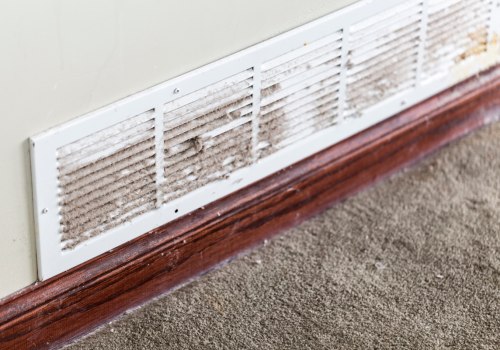
The dust that slips past coats the blower and mats onto the coil before it reaches the supply ducts. In measureQuick's overview of HVAC filtration, HVAC trainer Jim Bergmann says a technician cleaning a dirty blower wheel or evaporator coil is looking at a system with filter bypass. Filterbuy's guide to leak-free filter changes puts it plainly:
How Do You Install an 11.25x19.25x2 Filter in a Tight Slot?
Turn the system off, slide the filter in square with the arrow toward the blower, then confirm the seal before closing the slot.
1. Turn the system off at the thermostat. A running blower pulls the filter against the rails and makes it hard to seat.
2. Orient the new filter first. Filterbuy's installation guide suggests setting the arrow direction before you handle the dusty old filter.
3. Pull the old filter out and read it. A gray dust line along one edge marks where it leaked.
4. Wipe the rails and slot ledges. Filterbuy's guide names residue on the ledges as a common cause of uneven seating.
5. Slide the new filter in long edge first, flat and square. A bowed frame leaves a gap on the opposite edge.
6. Push it to the back stop. A filter left short leaves a strip of open slot.
7. Run the three-seal check. Arrow toward the blower, no light or wiggle at any edge, cover closed tight.
8. Restart and feel the slot edges. You shouldn't feel the air moving. Write the date on the frame.
Is One 11.25x19.25x2 Filter Enough for Your System?
One 11.25x19.25x2 filter suits systems up to about 1.5 tons; larger systems need more filter area. Its face is only about 1.5 square feet, so air speed through it climbs quickly. measureQuick's Jim Bergmann recommends a face velocity below 500 feet per minute (FPM), ideally 250 to 300.
Assuming the common design rule of about 400 cubic feet per minute (CFM) per ton of cooling, here is how air speed through one filter changes with system size:
• 1 ton (400 CFM): about 270 FPM, in the ideal range.
• 1.5 tons (600 CFM): about 400 FPM, acceptable.
• 2 tons (800 CFM): about 530 FPM, too fast for one filter.
• 3 tons (1,200 CFM): about 800 FPM, which needs more filter area.
On a 2-ton or larger system, look for a second return filter. If there isn't one, ask an HVAC technician about adding filter area before moving up to MERV 13.
How Do You Fix a Gap Around an Air Filter?
Seal the slot, not the filter. Self-adhesive closed-cell foam gasket on the rails closes small, even gaps, and each new filter presses against it. The U.S. EPA's Guide to Air Cleaners in the Home says a filter should fit snugly so air doesn't leak around it, without bending or crushing it to fit.
A gap on one side usually means a bent rail or warped frame, so straighten the rail or replace the filter. If the slot is a different size, buy the right size instead of trimming a pleated filter. Never tape the media or the frame.

Why Does the Filter Slot Cover Matter?
The slot cover completes the seal. Without it, the blower pulls room air through the open slot and around the filter, and a missing or loose cover is often a bigger leak than any edge gap.
In a furnace room, an open slot can also create negative pressure that draws exhaust down the vent of a natural-draft gas water heater or furnace. Replace a lost or cracked cover, seal a loose one with foil tape on the cabinet, and keep a working carbon monoxide alarm nearby.
“Swap the filter wrong, and you haven’t improved air quality at all.”
Essential Resources: Guides for Choosing and Fitting an 11.25x19.25x2 Air Filter
1. Confirm the True Size of an 11.25x19.25x2 Filter
Filterbuy 11.25x19.25x2 Air Filters lists the actual dimensions, 11.25 x 19.25 x 1.75 inches, and the MERV 8, 11 and 13 options for this size.
2. Find Your Filter Slot Before You Measure
Discovering the AC Air Filter's Spot in My House shows where furnace and return-grille filters usually sit.
3. Decode What MERV Ratings Capture
The National Air Filtration Association's guide to ASHRAE Standard 52.2 shows which particle sizes each MERV level must remove in lab tests.
4. Choose a Filter Your System Can Handle
The U.S. EPA's Guide to Air Cleaners in the Home explains how to pick the highest MERV rating your system can accommodate and why the filter must fit snugly.
5. Read the Research on Edge Gaps
Modeling Filter Bypass: Impact on Filter Efficiency, by Ward and Siegel, explains why gaps hurt high-efficiency filters the most.
6. Know When Your Ducts Actually Need Cleaning
The U.S. EPA's Should You Have the Air Ducts in Your Home Cleaned? lists the conditions that justify cleaning and the steps that prevent duct contamination.
7. Hire a Duct Cleaner Who Meets a Real Standard
How to Choose the Right Air Duct Cleaning Service from this site explains why NADCA certification matters and what certified technicians are trained to do.
Supporting Statistics: What U.S. Research Says About Filter Fit
Three U.S. findings show why the seal around the filter matters as much as the filter itself.
1. A typical U.S. home loses 20 to 30 percent of its duct air to leaks. ENERGY STAR's duct sealing guidance reports this figure, and a loose filter slot is one of those leaks on the return side.
2. Home HVAC systems run less than 25 percent of the time in heating and cooling seasons. The U.S. EPA notes that filters only clean while the system runs, so bypassed air is filtration the home never gets back.
3. A 20 percent filter bypass raised modeled PM2.5 exposure by up to 50 percent. The finding comes from a Penn State study funded by the U.S. National Science Foundation (Park et al., 2023), which tested a home ventilation system rather than a furnace.
Final Thoughts
A new filter only helps if the air goes through it. For an 11.25x19.25x2, that means the exact size, the arrow toward the blower, sealed edges and a closed cover, checked at every change. Those few minutes protect the blower and ductwork far more cheaply than cleaning them later.
Next Steps
1. Measure your slot opening and confirm it matches 11.25 x 19.25 inches.
2. Check your system's size against the face-velocity figures above before choosing a MERV rating.
3. Install the new filter with the eight steps above and run the three-seal check.
4. Put your next change date on the calendar using the replacement schedule in the FAQ.

Frequently Asked Questions
What happens if you put an air filter in backward?
It still catches dust but loads unevenly, and its pleat support ends up on the wrong side. Over time it can bow toward the blower and open edge gaps, so flip it until the arrow points at the blower.
Can I use a 1-inch filter in a 2-inch slot?
No. A 1-inch filter leaves about an inch of open space, a wide bypass path. Use the 2-inch nominal size the slot was built for, such as Filterbuy's 11.25x19.25x2.
Which MERV rating should I use in an 11.25x19.25x2 slot?
The U.S. EPA recommends MERV 13 or the highest rating your system can handle. If this is the only filter on a system of 2 tons or more, have a technician confirm the system can handle MERV 13's extra resistance first; otherwise MERV 8 or 11 is the safer choice.
How often should you change an 11.25x19.25x2 filter?
Every 2 to 3 months in a typical home, according to Filterbuy's published schedule for 2-inch filters. Change it every 6 to 8 weeks with pets or allergies and every 4 to 6 weeks in high-dust homes, and sooner if it looks heavily soiled.
How do I know if my ducts need cleaning because of filter bypass?
Dust streaks at the slot and a gray blower wheel point to bypass. A dusty return grille alone is normal, according to the U.S. EPA, which reserves cleaning for visible mold, vermin, or dust blowing from supply registers. Check the other signs your air ducts need professional cleaning and hire a NADCA-certified air duct cleaning service if they apply.
Get Your System Checked
If your blower wheel or supply registers already show dust, a sealed filter will stop new buildup but won't remove what's there. Schedule an inspection with a NADCA-certified air duct cleaning service, and ask the technician to check your filter slot and cover while they're on site.
Learn more about HVAC Care from one of our HVAC solutions branches…
Filterbuy HVAC Solutions - Miami FL - Air Conditioning Service
1300 S Miami Ave Apt 4806 Miami FL 33130
(305) 306-5027
https://maps.app.goo.gl/Ci1vrL596LhvXKU79