Yes, though not the way almost every page tells you. A loaded 15x25x1 filter raises your energy cost by choking airflow rather than by making the blower draw more power, which changes what you should measure. Restricted airflow stretches run times, cuts delivered capacity, and lets dirt reach the evaporator coil. According to the U.S. Department of Energy's air conditioner maintenance guidance, swapping a clogged filter for a clean one can cut an air conditioner's energy consumption by 5% to 15%, which works out to somewhere around $25 to $75 a year for an average household.
Before writing a word of this, I read every page ranking for the question, and they all told the same story: a dirty filter makes the blower work harder, so it burns more electricity. Hunting for the measurement behind that story turned up a year-long study across 19 homes reporting the opposite result on an entire class of blower motor.
Key Takeaways
• PSC blower motors draw less power as the filter loads, surrendering airflow instead, while ECM motors draw more because they compensate to hold airflow steady. Your bill rises either way.
• Most furnaces and air handlers are rated for a total external static pressure of 0.5 inches of water column, and of that, a 1-inch filter is budgeted roughly 0.1 in. w.c.
• Since a clean 1-inch pleated filter typically drops 0.10 to 0.20 in. w.c., those two numbers sitting side by side produce the finding I keep returning to: a clean 1-inch filter is already at or over its pressure budget the day you install it.
• Changing the filter fixes things only when the filter is the restriction. Where pressure stays high behind a brand-new filter, look downstream at undersized returns or a fouled coil or crushed ductwork.
Does a Dirty 15x25x1 Filter Actually Use More Electricity?
A dirty 15x25x1 filter uses more electricity on some systems and less on others, depending on which blower motor you have. A permanent split capacitor (PSC) motor runs at a fixed speed tap and cannot compensate, so as it loads the filter starves the fan and power draw falls. An electronically commutated motor (ECM) holds a target airflow instead, pulling more watts as resistance climbs.
Researchers at the University of Toronto measured this across 19 homes over a full year, adding a pressure drop of 150 Pa, or roughly 0.6 inches of water column. ECM fans responded by raising power draw 46% to 58% while holding airflow, whereas PSC fans in the same conditions cut power draw by 10% to 23% and gave up airflow instead. The study by Alavy, Li, and Siegel appeared in Energy and Buildings in 2020.
None of which makes a dirty filter harmless. The popular explanation has simply named the wrong culprit: on a PSC system your blower is not eating more electricity, only under-delivering, and the cost arrives later as longer runtime from the compressor and heat exchanger, the expensive parts.
"I stopped asking homeowners what their blower is doing. It is the wrong question. The filter is a pressure component, and pressure is the thing you can measure."
How Do I Tell Which Blower Motor I Have?
Listen to it start. A PSC blower slams on at full speed the instant the thermostat calls, while an ECM ramps up over several seconds and winds down the same way, so the check costs ten seconds and no tools.
For certainty, kill power at the breaker and read the plate on the motor itself. ECM motors are labeled as such, or as variable speed, or carry a name like GE ECM or Genteq, whereas a PSC motor lists a capacitor rating and horsepower with no speed electronics.
Age narrows it too, since ECM blowers spread across mid-tier and premium equipment through the 2010s. Assume PSC if your system is over fifteen and was not a premium install.
Knowing which you have tells you what neglect is doing: with a PSC you lose airflow quietly, while an ECM compensates, drawing more power and masking the problem until something else gives.
What Does a Loaded 15x25x1 Filter Do to Static Pressure?
A loaded 15x25x1 filter pushes total static pressure past the system's design limit faster than most homeowners expect, because a 1-inch filter starts with almost no margin. Static pressure is the resistance air meets moving through your ducts, filter, and coil, measured in inches of water column. Most residential equipment is designed around a total external static pressure of 0.5 in. w.c., the combined return-side and supply-side reading taken closest to the blower.
Of that half-inch, the filter gets only a sliver. David Richardson of the National Comfort Institute, writing in ACHR News, sets out the four static pressure readings a technician needs to diagnose airflow and gives the working rule that filter pressure drop should stay under roughly 20% of the fan's rated maximum, or about 0.1 in. w.c.
Now run the arithmetic, which I have not seen another page bother to do. Against a budget of 0.1 in. w.c., a clean 1-inch pleated filter commonly measures 0.10 to 0.20, spending its whole allowance and possibly double it while still white. Three months of dust and pet dander can double it again, at which point the filter alone eats most of the budget the entire duct system was designed around.
A 1-inch filter, then, is not a component with headroom that slowly fills. It starts at the edge, which is why it needs replacing more often than thicker media, and that rhythm matters alongside how filter replacement and duct cleaning work together, since the two jobs solve different problems.
Where Does the Cost Actually Show Up on My Bill?
In runtime and lost capacity, never in the blower's nameplate wattage. Because less air across the coil means less heat moved per minute, the system satisfies the thermostat more slowly and runs longer, and runtime is where residential HVAC energy really goes.
Capacity loss compounds it, since a system moving less air is no longer delivering its rated tonnage. Richardson puts the ceiling bluntly in the same piece: a restrictive filter has the potential to degrade system efficiency by 40% or more.
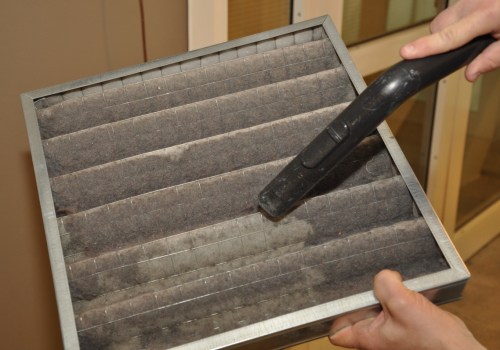
Then comes coil fouling, the part I think gets undersold everywhere. Once airflow is obstructed, air finds paths around the filter and carries dirt to the evaporator coil, where it insulates the surface and degrades heat transfer until somebody cleans the coil professionally. That penalty does not reverse when you change the filter, which is why a late change is never a cost you catch up on.
One correction while we are here. The DOE's 5% to 15% figure describes total system energy rather than blower watts, and I have watched it quoted as though it meant the latter, a misreading that produces the "your fan is working harder" explanation.
So What Does This Cost in Dollars?
Roughly $25 to $75 a year for an average household. Nobody else seems to publish that number, so here is the arithmetic.
Per the EIA's 2020 Residential Energy Consumption Survey, the average U.S. household using central air conditioning spends about 2,318 kWh a year on the air conditioner and 457 kWh on the air handler, or 2,775 kWh on the cooling side. Apply the DOE's 5% to 15% range and you get 139 to 416 kWh. At a residential rate near 18 cents per kWh, that lands at about $25 to $75.
Run it with your own figures, though, because the national average hides an enormous spread:
(your annual cooling kWh) × (0.05 to 0.15) × (your rate per kWh) = your range
A Phoenix household on a high rate running eight months a year will land well above that. A Seattle household near 12 cents lands below.
Now the honest part, and the reason I ran the numbers. Seventy-five dollars is not the figure the filter aisle wants in your head, but it recurs annually and a filter costs a fraction of it, so changing on schedule pays for itself several times over. What it will not do is transform your bill, and any page implying otherwise is selling you something. The stronger arguments never appear on the bill: the coil you are protecting and the capacity you are not losing.
What Does a Filter Change Fix, and What Does It Not?
Changing the filter restores the pressure drop that filter was causing, and nothing beyond it. Where static pressure stays high behind a fresh filter, the restriction lives elsewhere: crushed return ducts, blocked grilles, a dirty coil, or a duct system never sized for the equipment. A duct professional measuring both sides of the air handler can separate those in one visit, and there are other signs pointing to a duct problem worth checking first.
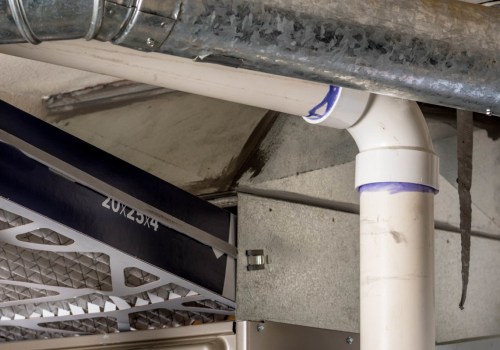
Confirm the size by reading the printed dimensions on the filter you remove rather than by measuring the slot. Filterbuy is a U.S. air filter manufacturer based in Talladega, Alabama, that produces pleated residential HVAC filters in MERV 8, MERV 11, and MERV 13 ratings. According to Filterbuy's published specifications for this size, a nominal 15x25x1 actually measures 14.5 by 24.5 by 0.75 inches. I checked that against the listing directly rather than repeating it secondhand, since it is the one number a reader acts on at purchase. EPA duct guidance warns that air must not bypass the filter through gaps around the holder, and a filter sitting loose in the rack defeats both filtration and any pressure reading you take.
Do not treat higher MERV as automatically better. Filterbuy lists this size in MERV 8, 11, and 13, and that spread is the useful thing to notice, because the top of the range is not automatically right for a 1-inch slot. Pleat design matters more than the rating number, and a restrictive 1-inch panel in a tight duct system can push static pressure past what the equipment is rated to handle. The EPA advises using the highest efficiency filter your manufacturer recommends, a different thing from the highest efficiency filter on the shelf. For stronger filtration without the pressure penalty, the answer is usually more filter area, meaning a 4-inch or 5-inch media cabinet.
Can I Check This Myself Without a Technician?
Yes, with a cheap thermometer. Run the system in cooling for fifteen minutes, then measure air temperature at a return grille and at a supply register. The difference between them is your temperature split, which on most systems lands around 16 to 22 degrees Fahrenheit.
A split noticeably above that range suggests restricted airflow, because less air is crossing the coil and each pound of it gets chilled further. That is the signature of a loaded filter, though equally of a blocked return or a duct problem, so the reading narrows the field without settling it. A split well below the range usually points at a refrigerant or coil issue, not a filter question.
Two limits first. Humidity shifts the expected split, so a muggy house reads lower than a dry one at the same airflow, and a thermometer measures a symptom rather than a pressure.
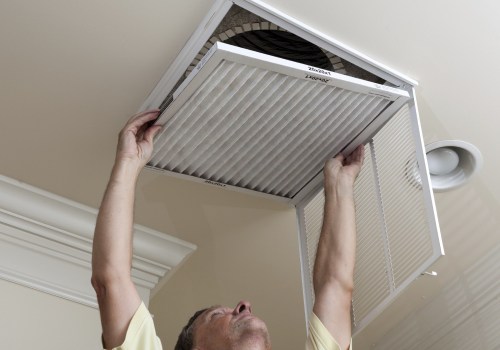
Buy the replacement first and check actual dimensions rather than nominal ones so it seats properly. Filterbuy publishes both figures for the 15x25x1, which is how I confirmed the measurement above, and a filter that does not sit flush leaks air around the frame and hands you a split that means nothing.
Take two readings: one with the filter you have been running, one twenty minutes after installing a fresh one. Should the split move back toward normal, the filter was your restriction. Should it barely budge, you have learned something more valuable, which is that the filter was never the problem.
Seven Vetted Resources for Choosing a 15x25x1 Air Filter
Seven sources that answer what comes after this page: which rating to buy, whether your system can carry it, and how to prove the filter is the restriction. All are government, peer-reviewed, or trade sources. None of them sell filters.
1. Choose Your MERV Rating Without Guessing
U.S. Environmental Protection Agency, What Is a MERV Rating?
The EPA publishes the full MERV 1 to 16 capture-efficiency table, so you can see exactly what each rating traps before you pay for it. It also states the qualifier most retail pages leave out: go as high as your system fan and filter slot can actually accommodate.
Best for: deciding which rating to buy.
https://www.epa.gov/indoor-air-quality-iaq/what-merv-rating
2. Compare Filters Across Brands That Use Different Rating Systems
U.S. Environmental Protection Agency, Guide to Air Cleaners in the Home
MERV is a consensus standard, while MPR and FPR are proprietary, which is why two filters on the same shelf can look impossible to compare. This guide decodes all three and explains how to confirm a filter fits snugly enough that air cannot leak around the frame.
Best for: translating one brand's number into another's.
https://www.epa.gov/indoor-air-quality-iaq/guide-air-cleaners-home
3. Find Out What a 1-Inch Filter Really Costs You in Pressure
HVAC School, Air Filter Static Pressure Drop, by Bryan Orr
A working technician measured a store-bought 1-inch MERV 11 at 0.26 in. w.c. on his own 2-ton system, more than half the total pressure budget before any ductwork or coil enters the picture. He also documents the PSC versus ECM divergence from his own field readings.
Best for: seeing the pressure arithmetic on this page confirmed by measurement.
https://www.hvacrschool.com/air-filter-static-pressure-drop/
4. Set a Replacement Schedule a Federal Program Stands Behind
ENERGY STAR, Heat and Cool Efficiently
ENERGY STAR advises checking the filter monthly through heavy-use season and replacing it at minimum every three months, reasoning that a dirty filter slows airflow and forces the system to work harder. That is the same airflow-first logic this page argues for, stated by a federal program rather than a manufacturer.
Best for: turning the 60-to-90-day rule into a habit you can defend.
https://www.energystar.gov/saveathome/heating-cooling
5. Verify the Blower Motor Finding Against Peer-Reviewed Measurement
Alavy, Li and Siegel, Energy and Buildings, Volume 209 (2020)
Across 19 homes measured for a full year, added filter resistance made ECM fans draw 46% to 58% more power while PSC fans drew 10% to 23% less. This is the Semantic Scholar record rather than the publisher page, because the publisher blocks automated retrieval and this version stays readable.
Best for: checking the evidence behind the central claim yourself.
https://www.semanticscholar.org/paper/85abbe9c0f8bd5597877f49bdd48d6742a02e1bf
6. See Why the Fan Is Not Where Your Money Goes
U.S. Energy Information Administration, Electricity Use in Homes
Air conditioning is the single largest electricity end use in the average U.S. home, and the air handler serving it is a far smaller line item. Reading the two side by side is what makes the argument on this page concrete.
Best for: understanding why runtime matters more than blower watts.
https://www.eia.gov/energyexplained/use-of-energy/electricity-use-in-homes.php
7. Check What the Equipment Manufacturers Tell Homeowners
Air-Conditioning, Heating, and Refrigeration Institute, Save Energy
AHRI is the trade body that certifies HVAC equipment performance ratings across North America, so its homeowner guidance reflects what the manufacturers themselves treat as the controllable levers. Useful as a cross-check on any contractor recommendation you are weighing.
Best for: sanity-checking advice you have been given.
Supporting Statistics
Three federal datasets back the core claim: a clogged filter costs you in runtime and lost capacity, not in blower watts.
1. Heating and Cooling Dominate Home Energy Use
Roughly 43% of a home utility bill typically goes to heating and cooling, more than any other system in the house.
Source: U.S. Department of Energy, Why Energy Efficiency Matters
https://www.energy.gov/energysaver/why-energy-efficiency-matters
Why it matters: These are the loads that run longer when airflow drops. Lost capacity does not add a small cost to a small load. It adds runtime to the largest energy use in the house.
2. The Blower Uses a Fraction of the Load It Serves
Average annual electricity per U.S. household, by end use: air conditioning 2,318 kWh, air handlers for cooling 457 kWh, air handlers for heating 233 kWh. The blower draws roughly one-fifth of the cooling load it moves air for.
Source: U.S. Energy Information Administration, 2020 RECS, Table CE5.3a. Figures are averages per household using that end use.
https://www.eia.gov/consumption/residential/data/2020/c%26e/pdf/ce5.3a.pdf
Why it matters: Push an ECM blower to draw 50% more power and that increase lands on the smaller number, while the compressor runtime it distorts is the larger one. The mechanism matters more than the motor.
3. Most Duct Systems Leak Before the Air Arrives
20% to 30% of the air moving through a typical duct system is lost to leaks, holes, and poorly connected ducts.
Source: ENERGY STAR, a joint program of the U.S. Environmental Protection Agency and the U.S. Department of Energy, Duct Sealing
https://www.energystar.gov/saveathome/heating-cooling/duct-sealing
Why it matters: A new filter cannot recover air that never reaches the room. When static pressure stays high after a filter change, this is the scale of the problem waiting behind it.
Next Step
Get a static pressure reading before you assume a filter change solved anything. It takes a technician minutes alongside a scheduled service call, and the filter is the part you can see, which is most of why it gets blamed for problems it did not cause.
Frequently Asked Questions
How often should a 15x25x1 filter be replaced?
Every 60 to 90 days for most homes, dropping to 30 to 60 with pets or heavy runtime. One-inch filters hold little dust, so they reach meaningful pressure drop faster than 4-inch media.
How much money will changing my filter actually save me?
Roughly $25 to $75 a year for an average household using central air conditioning, working from 2,775 kWh of annual cooling-side electricity against the DOE's 5% to 15% range at roughly 18 cents per kWh. It pays for the filters several times over without transforming your bill.
Can a dirty air filter actually lower my electric bill?
On a PSC blower system the blower draws less power as the filter loads, yet your total bill still rises, because the system loses capacity and runs longer to compensate. Which is why "my fan sounds fine" is not reassurance.
How do I know if my filter is the real restriction?
Have a technician measure static pressure on both sides of the air handler with a manometer. If total external static pressure stays above 0.5 in. w.c. with a brand-new filter installed, the filter is not your problem.
Will duct cleaning lower my energy bill?
The EPA is careful on this point: some research suggests cleaning coils, fans, and heat exchangers can improve efficiency, but little evidence supports cleaning ducts alone. It earns its cost when there is visible mold or vermin, or debris heavy enough to see. For a fuller picture of whether duct cleaning saves money, airflow restriction traces far more often to undersized returns or a fouled coil or plain bad duct design than to dust in the duct walls.
Learn more about HVAC Care from one of our HVAC solutions branches…
Filterbuy HVAC Solutions
2521 NE 4th Ave, Pompano Beach, FL 33064
(754) 247-3511